EzyPlatform is a software platform (low-code platform) that already provides the core building blocks — so that anyone, from complete beginners to professional developers, can build and run their own real digital product.
Instead of stitching together a database, login system, email sending, payments... from dozens of separate tools, EzyPlatform packages everything into a single platform, organized into modules that can be turned on, off, or installed at any time. You can write code the traditional way yourself, or describe what you need and let AI write the code for you — EzyPlatform doesn't care which way you choose, as long as the end product actually runs, is secure, and has somewhere to "live" long-term on the Internet.
What is EzyPlatform?
The answer depends on which angle you're looking at EzyPlatform from.
Everyday user
- Starts as a CMS for managing content
- Expands into sales, customers, payments, marketing
- Built-in features to work with AI easily
Developer
- Backend ready out of the box: authentication, authorization, APIs, ecommerce...
- Customize the frontend, write plugins and your own business logic in Java
- AI-assisted development via MCP Server, EzyAI, EzyRAG, EzyVector
The same single platform — just a different way of approaching it.
Everyday user
EzyPlatform is a platform that helps you build, manage, and run a website or web application on a single system. You can start as a CMS to manage content, then expand into sales, customers, payments, marketing, search, and business-specific functions — all on the same infrastructure, without switching tools along the way. EzyPlatform also comes with built-in features for working with AI, supporting everything from building interfaces and developing features to mining data, so businesses can build → manage → scale → integrate AI on a single platform.
Developer
EzyPlatform is a platform for developing and running web applications, providing many backend components out of the box so you don't have to build everything from scratch: admin, authentication, authorization, CMS, media, API, search, ecommerce, payment, marketing... Developers can still customize the frontend, build backend logic in Java, and write their own plugins and business logic as needed. The platform also supports AI-assisted development through MCP Server and provides EzyAI, EzyRAG, EzyVector for building AI, RAG, and vector search applications.
In short, you can think of EzyPlatform as an application platform with deep code-level customizability, but one that provides common infrastructure and features out of the box so developers can focus on the product instead of rebuilding it from the ground up.
Who is behind EzyPlatform?
EzyPlatform is developed by Young Monkeys, an engineering team that has been building the platform for years — not a project that just launched recently. The platform itself is split into several coordinating subsystems: an admin system (Admin), a system serving end users (Web), a real-time connection service (Socket), a set of command-line tools and SDKs for packaging and publishing modules (CLI & SDK Tools), and an installer (Installer) to deploy the entire system to a new server in just a few steps.
Platform architecture
You don't need deep technical knowledge to use EzyPlatform — just an understanding of "what lives where":
flowchart LR
  Website("🌐 <b>Website</b><br/><span class='vc-node-sub'>What visitors see</span>"):::blue
  Admin("🛠️ <b>Admin</b><br/><span class='vc-node-sub'>Manage content, users</span>"):::blue
  Module("🧩 <b>Module</b><br/><span class='vc-node-sub'>Plugin / Theme</span>"):::green
  Database("🗄️ <b>Database</b>"):::purple

  Website --> Module
  Admin --> Module
  Module --> Database

  classDef blue fill:#3b82f6,stroke:#1d4ed8,color:#fff,stroke-width:2px;
  classDef green fill:#10b981,stroke:#047857,color:#fff,stroke-width:2px;
  classDef purple fill:#6366f1,stroke:#4338ca,color:#fff,stroke-width:2px;
- Website: the part visitors see — homepage, articles, products, contact forms.
- Admin: the admin area — where you (or your staff) manage content, orders, users, and toggle modules on/off.
- Module (Plugin/Theme): independent functional blocks — can be installed or removed at any time from the Marketplace.
- Database: where all data — articles, products, orders, users — is stored persistently.
Core strengths
| Piece | If you build it yourself | With EzyPlatform |
|---|---|---|
| Hosting & server | Rent and configure it yourself | Quick setup, ready to use immediately |
| Content management | Build an entire CMS yourself | EzyArticle included |
| Online sales | Build your own cart, payments | E-commerce plugin included |
| Automated email | Integrate a mail service yourself | EzyMail included |
| Extending features | Write everything from zero | Install more from the Marketplace |
| AI Assistant integration | Build your own connection and auth layer | MCP Server included |
Thanks to a database design and codebase organization that follow the same standard throughout the whole platform, adding a new feature — whether done by a developer or an AI Assistant — takes less time "guessing the context." Products ship faster, cost less, and have fewer security bugs than stitching things together from separate pieces.
50+ modules already built
This is the part rarely talked about, yet it's the real foundation of EzyPlatform: internally, the team has built more than 50 modules across many different domains — some are sold publicly on the Marketplace, others power internal products or customers' own projects. A few representative examples:
| Group | Representative modules |
|---|---|
| Sales & operations | E-commerce, Retail, Fashion, Omnichannel, EzyPayment, EzyDelivery, Logistics |
| Business administration | Accounting, EzyCRM, EzyOA (electronic office), EzyAccount, Data Backup |
| Content & community | EzyArticle (CMS), StackAsk (Q&A), Story, Publishing, Community, Markdown |
| AI & data | EzyAI (connects to ChatGPT/Claude), EzyRag, EzyVector, GraphQL (foundation for MCP Server) |
| Security & infrastructure | EzyDefence (anti-DDoS), EzyLogin, EzySEO, Logs Monitor, Socket Monitor |
| Entertainment & education | EzyGame, EzySmashers (real-time MMO game), Tournament, Elearning |
Among these, EzyAI is the intermediary layer that lets other modules call different AI services (such as ChatGPT, Claude) through a single common interface — instead of integrating each service separately.
An ecosystem, not just a product
What sets EzyPlatform apart from a standalone tool is that it's built as an ecosystem, where multiple parties create and benefit from shared value together:
mindmap
  root((EzyPlatform))
    Platform users
    Developers and agencies
    Plugin and theme developers
    Content creators and educators
    Service partners
    Businesses and organizations
- Platform users: individuals, small business owners, marketers... who build their own digital products, either writing code themselves or with AI's help.
- Developers & agencies: take over products when they need to scale, optimize performance, and improve security at a larger scale.
- Plugin/theme developers: contribute and sell their own products on the Marketplace.
- Content creators & educators: write books, create courses, and make videos teaching how to use the platform.
- Service partners: hosting, payment gateways, third-party integrations, deployment consulting.
- Businesses, organizations: need a digital product fast but outsource it through parties within the ecosystem instead of building their own team.
Why EzyPlatform is different
Today's software market is fairly fragmented: drag-and-drop tools limit customization, hiring developers to build custom software costs time and money, and stitching together many different services carries the risk of one piece dropping support along the way. EzyPlatform chooses to be a shared infrastructure, bringing every necessary piece together in a single platform.
- No platform lock-in: the output is still standard, readable, editable source code that can be deployed independently — not a black box that forces you to stay forever.
- Standardization means more safety: the pre-standardized infrastructure greatly reduces common security bugs from piecing together separate parts yourself — for example, exposing a secret key or password directly in client-side source code.
- Seamless scaling: when a product grows and needs a professional team to optimize performance and security, developers in the ecosystem can take over right away since they follow the same code standard — no rewriting from scratch.
What's inside EzyPlatform
Not just documentation — this is what's actually running in the ecosystem every day:
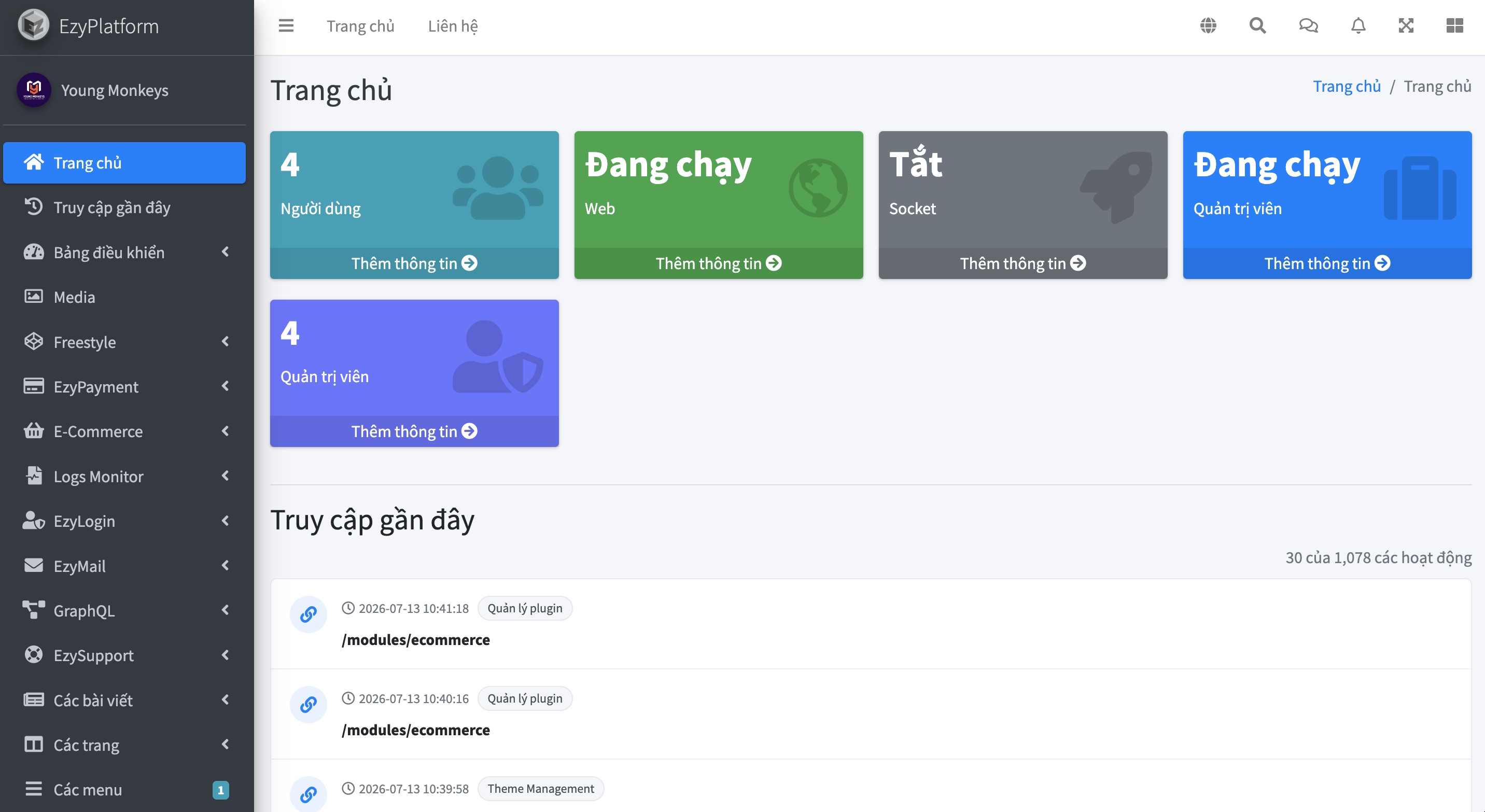
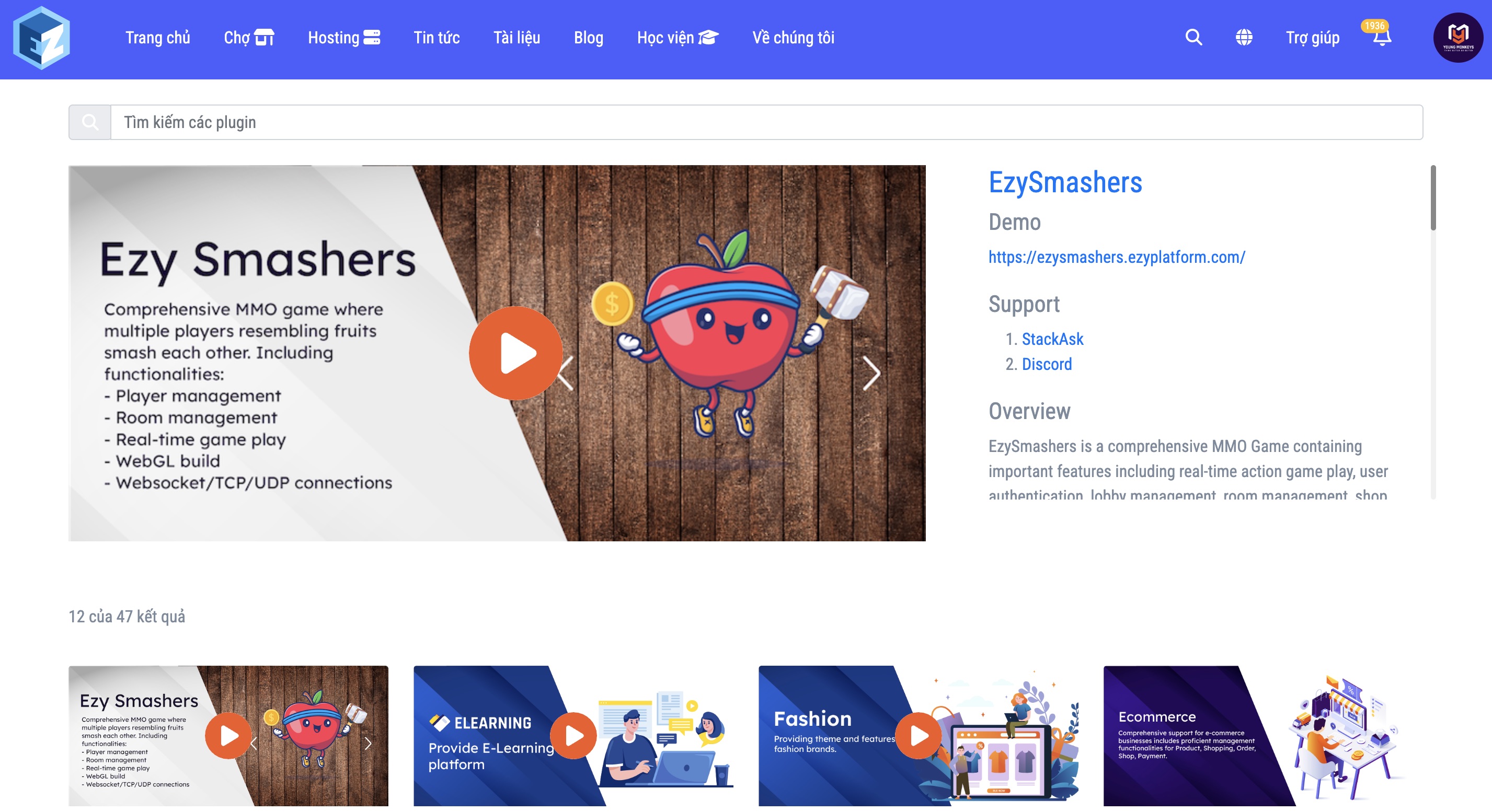
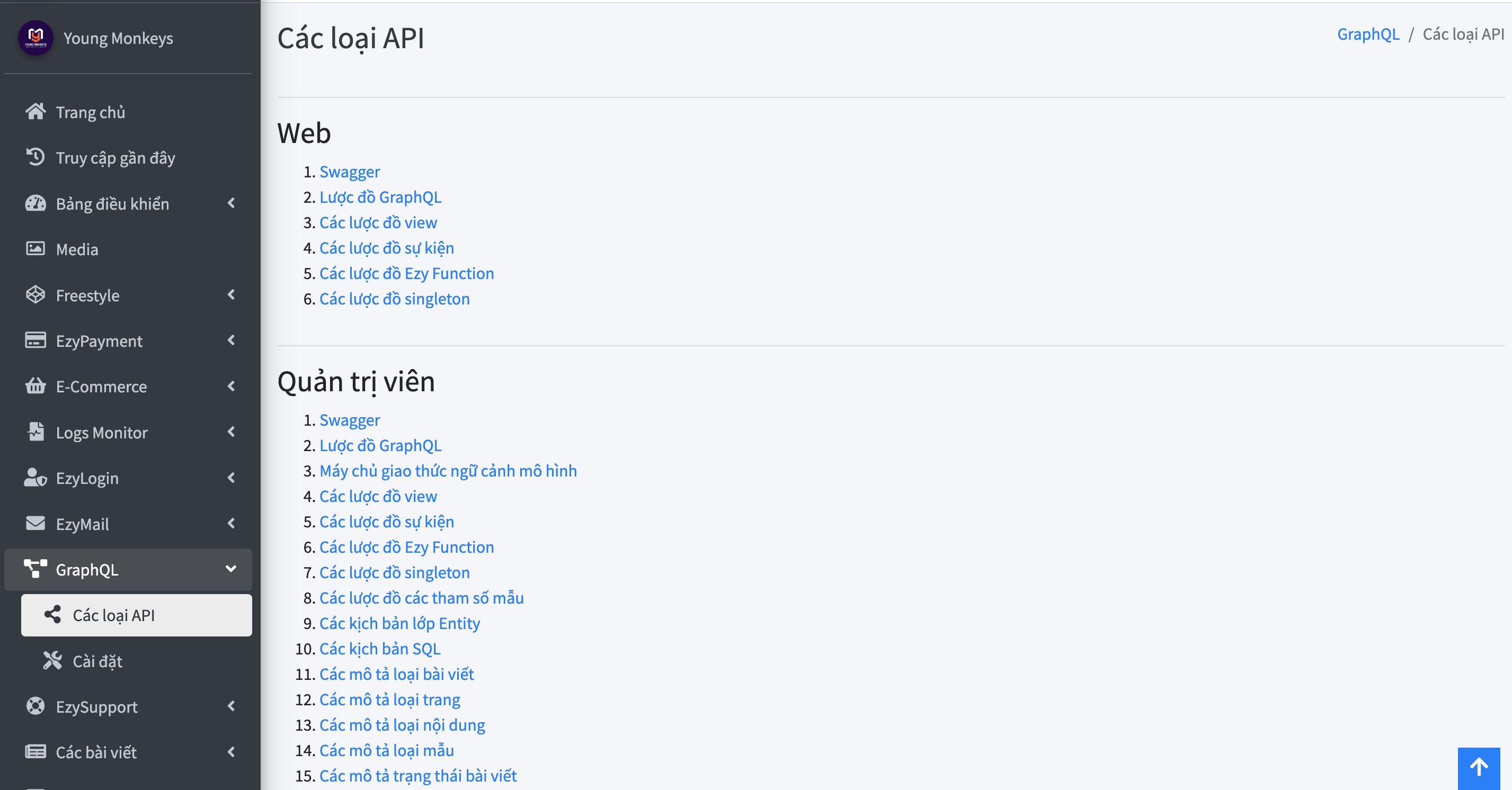
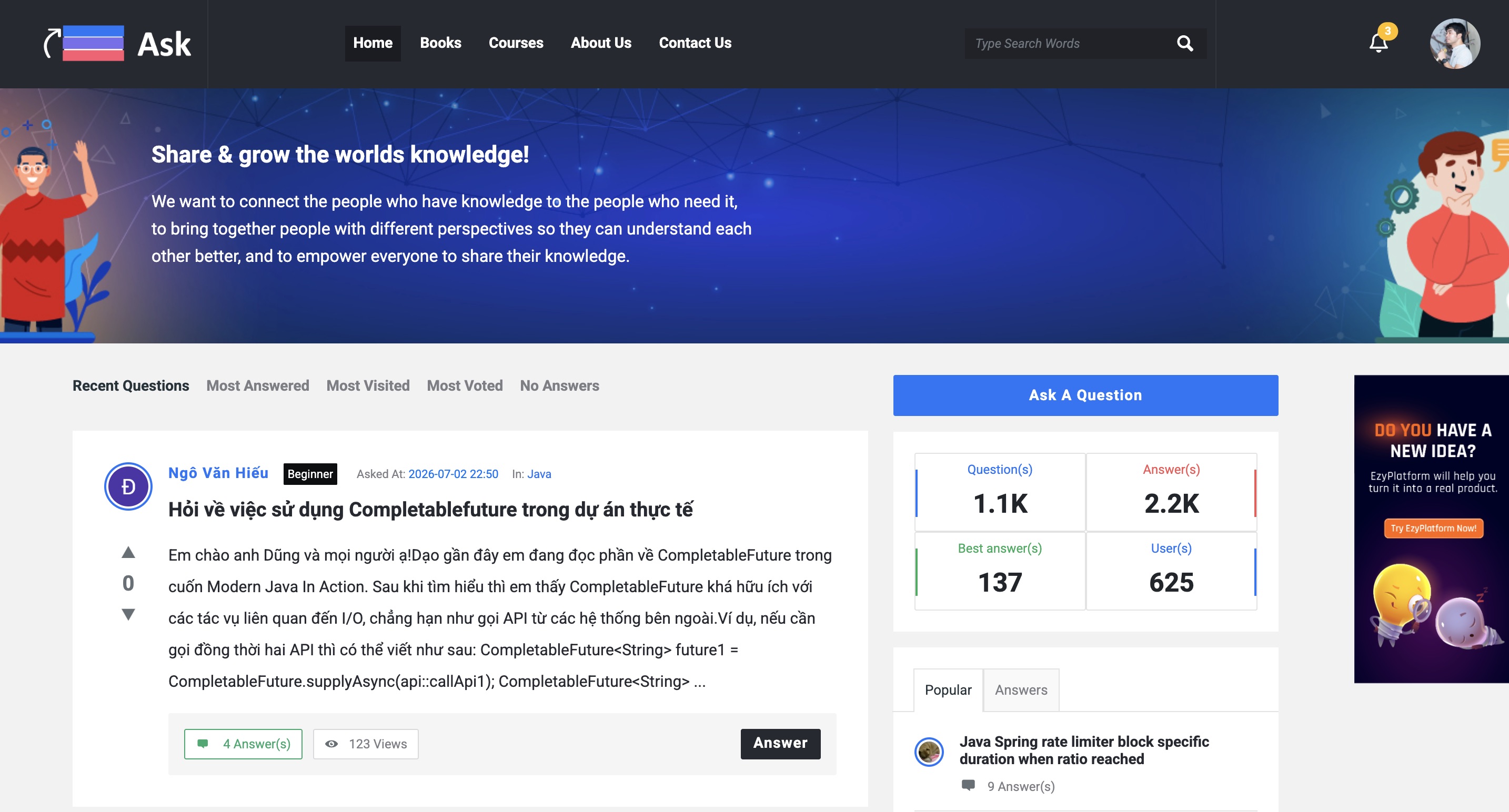
Real products running on EzyPlatform
These aren't ideas on paper. Below are a few real products, already up and running in the market, built on EzyPlatform:

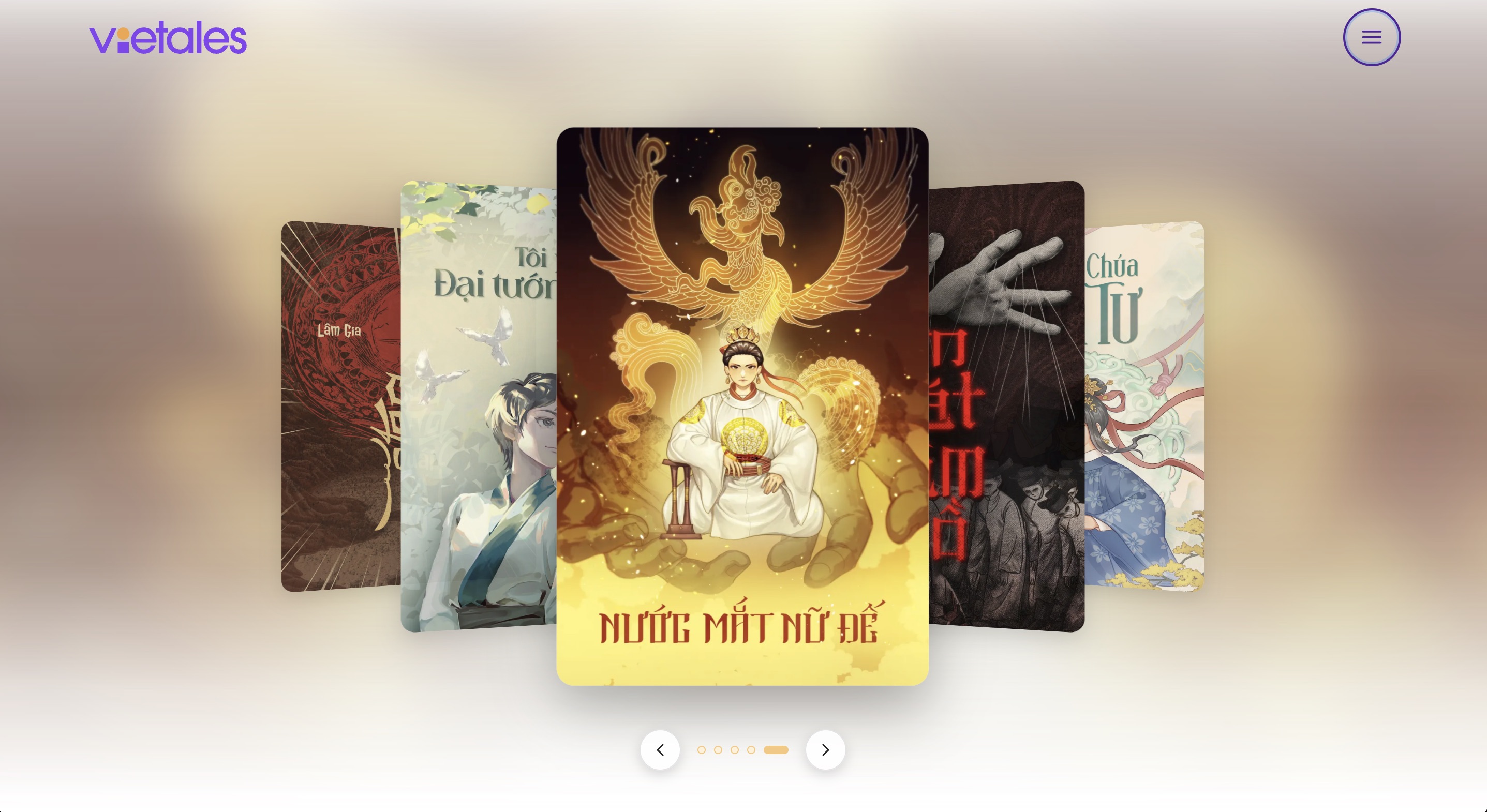
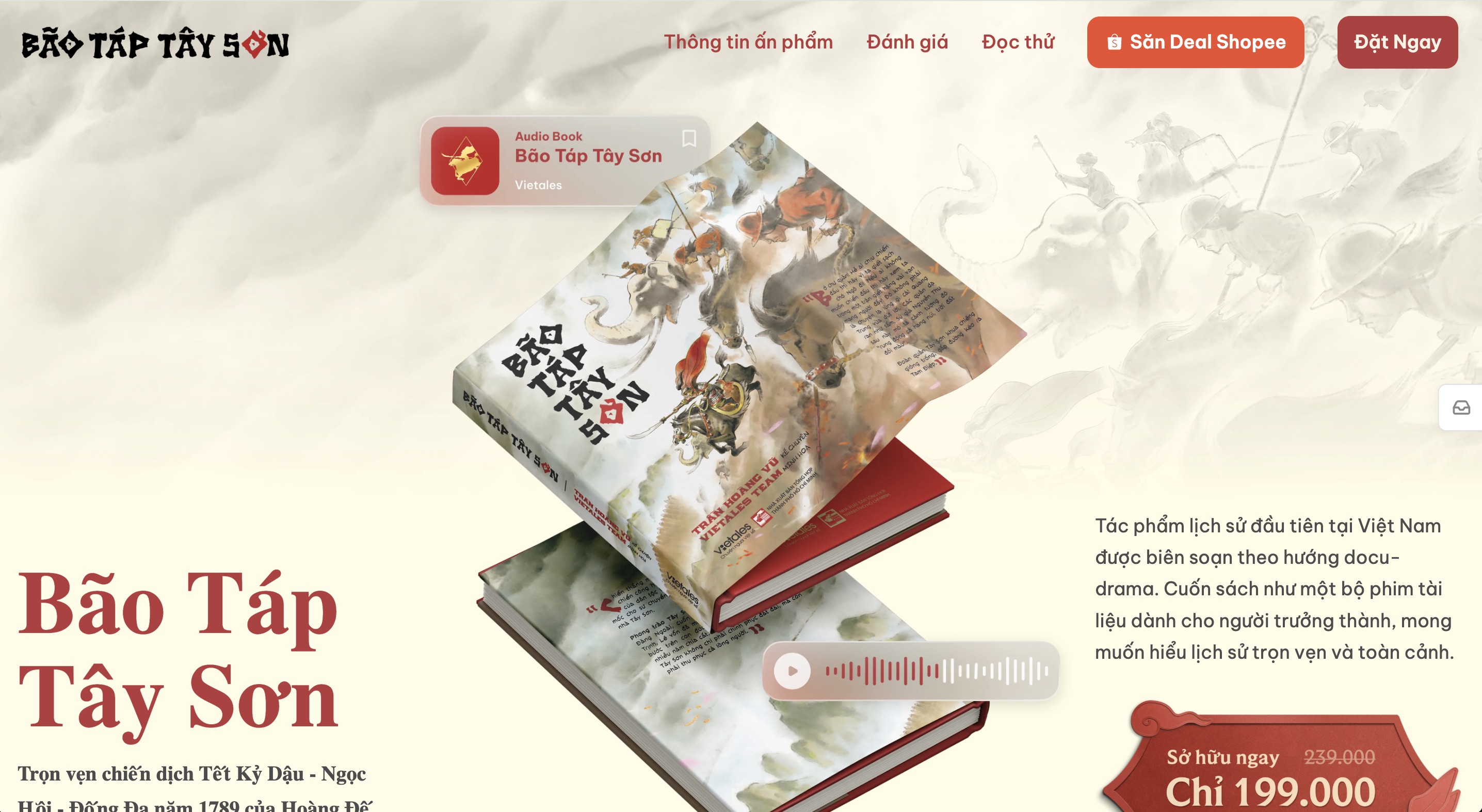

A community growing every day
The numbers below are actual recorded results, not estimates:
- 2,443+ members in EzyPlatform's Facebook community, and still growing.
- 1,100+ questions and over 2,200 answers in the professional support space.
Collaboration model
EzyPlatform doesn't keep all the value for itself; instead it earns revenue by making the whole ecosystem run more smoothly — the more parties participate, the more valuable the shared infrastructure becomes for everyone else:
- Plugin & theme marketplace: developers sell modules to an existing base of platform users — a distribution channel instead of chasing customers on their own.
- Hosting partners: VPS/cloud providers bundle server plans with EzyPlatform pre-installed, sold as subscriptions — a new revenue stream for infrastructure providers.
- Training & content publishing: courses, books, tutorial videos on using the platform — turning newcomers into proficient users.
- Professional services: developers and agencies take over products when they need to optimize performance, handle more load, and improve security at a larger scale.
- Integration service partners: payment gateways, delivery, third-party integrations reach customers with real, existing demand instead of cold traffic.
- Network effects: the more users, the more attractive the Marketplace is to developers; the more real products running, the more demand for handoff to agencies — every participant makes the ecosystem more valuable for everyone else.
Who EzyPlatform is for
- Beginners with no coding background: have an idea or a business and want to build their own website or tool.
- Developers & agencies: want an additional source of handoff clients and advanced development on a standardized codebase.
- Plugin/theme developers: want to distribute their product to a growing community of users.
- Educators & content creators: want a concrete, hands-on platform to illustrate lessons, with a ready-made community of learners.
- Businesses & organizations: need a digital product fast, at a reasonable cost, backed by a partner ecosystem ready to help when it's time to scale.
- Investors & strategic partners: interested in a multi-sided platform with real traction, multiple value streams flowing at once, and plenty of room left to grow.
EzyPlatform believes no single party can build this ecosystem alone — it takes many parties, each contributing their own strengths.